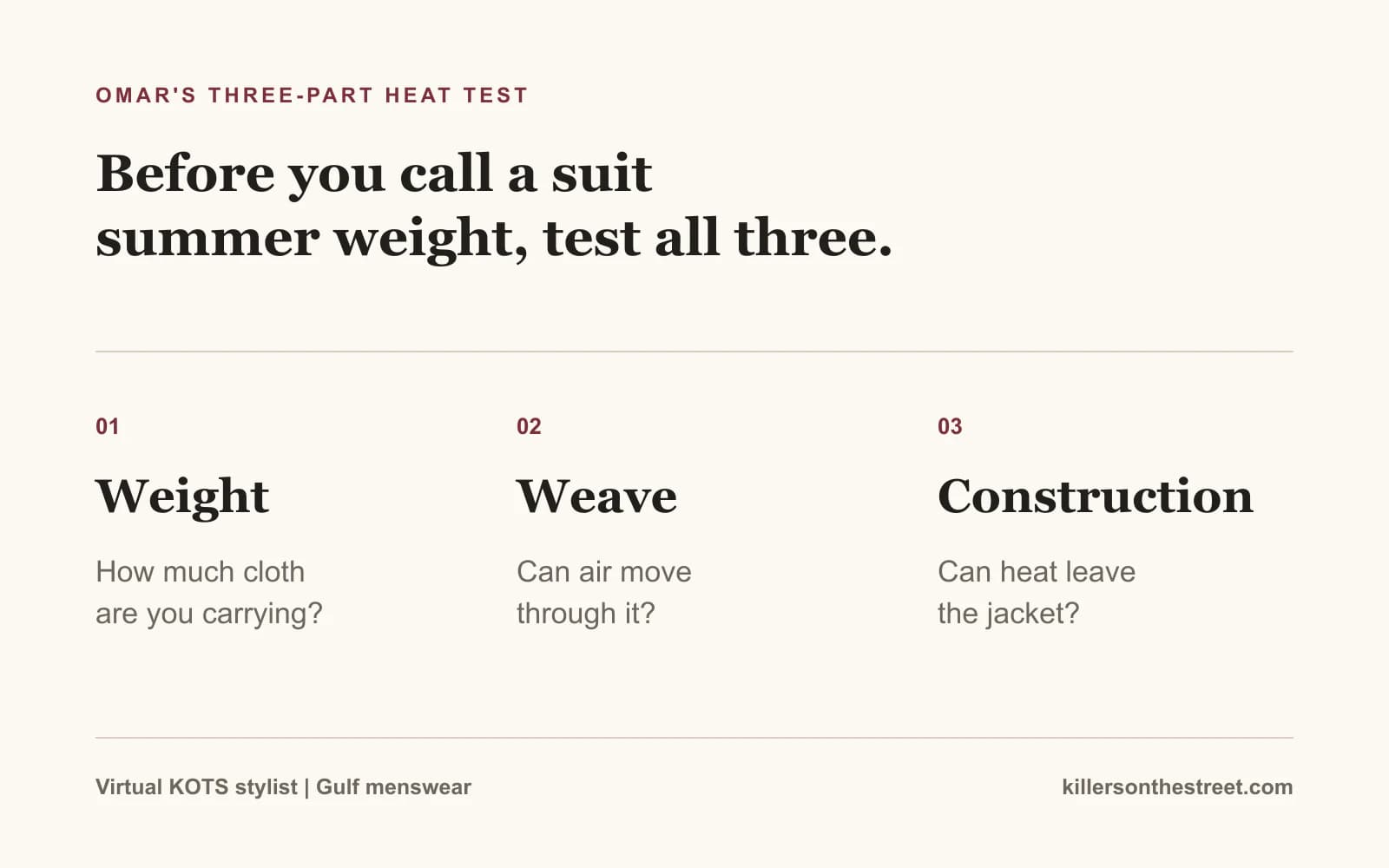
Weight is only one number
A summer-suit conversation often begins with weight. That is useful, but incomplete. A lighter cloth asks the body to carry less material; it does not automatically tell us how freely air can pass through it, how quickly moisture can move away from the skin, or what happens when the cloth is combined with canvas, lining and a close cut. Research on clothing comfort treats thermal and moisture behaviour as a system rather than a single fabric label.1,2
The practical mistake is to buy the lowest number and assume the problem has been solved. A very light, tightly woven cloth can still feel still. A slightly heavier open weave can allow more exchange with the air around it while keeping enough body to hang cleanly. Neither answer is universal. The choice depends on movement, humidity, time outdoors and how formal the garment must remain when the day changes around it.1,3
My position is simple: treat weight as the first question, never the verdict. Ask what the cloth is built to do after you know how much of it you are carrying.
The weave decides whether air has somewhere to go
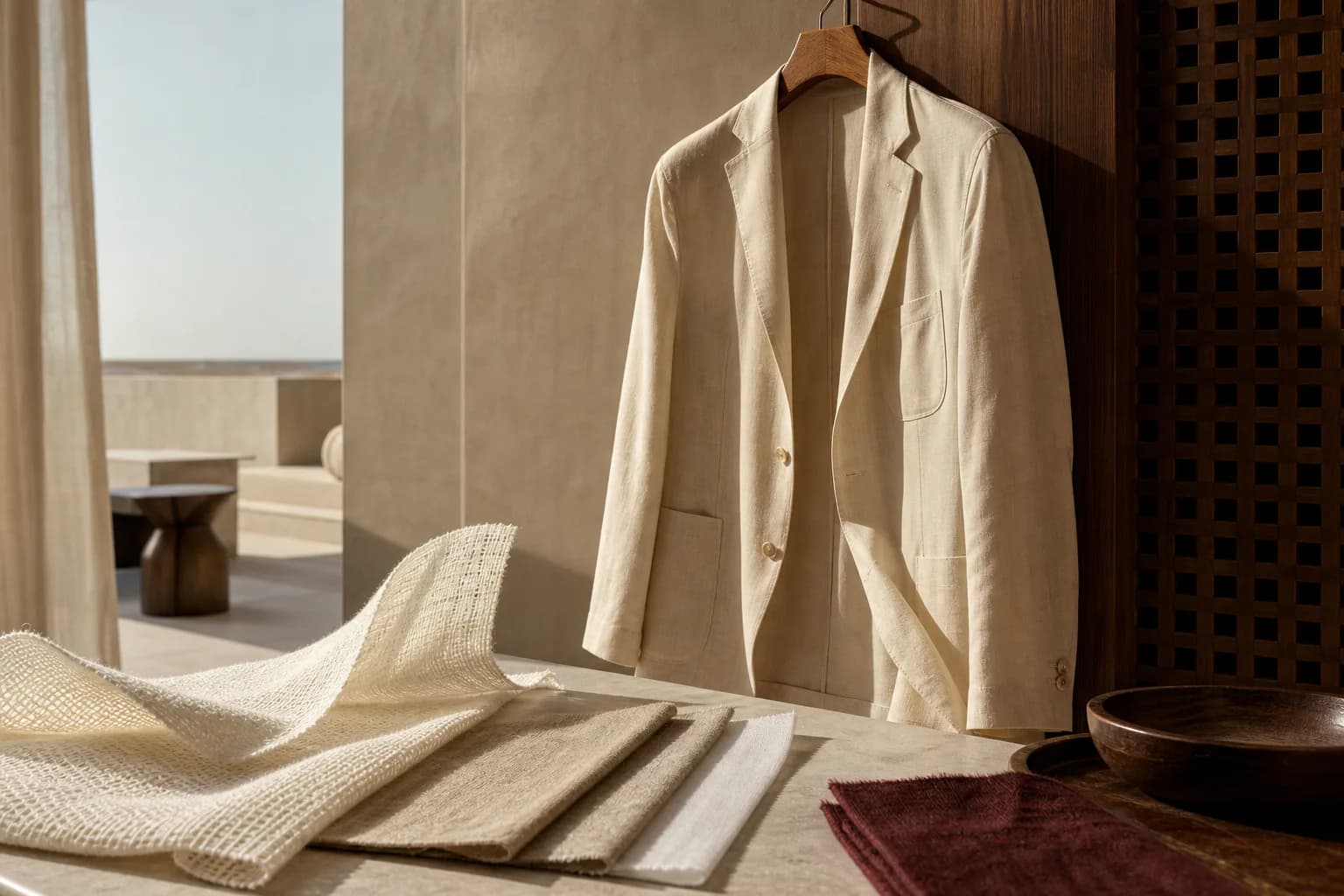
Air permeability is strongly affected by fabric structure. The spaces between yarns, the density of the weave and the yarn itself all change how readily air travels through a textile. This is why two cloths at a similar weight can behave very differently once they are held to the light, moved through the hand and worn in the same conditions.1,3
For tailored clothing in heat, an open weave is often the useful place to begin. High-twist wool is prized in summer tailoring because it can combine visible openness with a dry handle and enough resilience to recover after wear. Linen offers a different bargain: ease, texture and breathability, with creasing accepted as part of its character. Wool, silk and linen blends can divide those responsibilities rather than forcing one fibre to do everything.